Commercial Cleaning Services in Dallas
Professional cleaning solutions for businesses throughout Dallas, TX and surrounding areas including Downtown Dallas, Uptown, Deep Ellum, and more.
Commercial Cleaning Services in Dallas, Texas
Dallas stands as one of America's premier business destinations, a thriving metropolis in North Texas that serves as the economic and cultural heart of the Dallas-Fort Worth metroplex. With a population exceeding 1.3 million residents and a metropolitan area encompassing over 8.5 million people, Dallas represents one of the largest urban centers in the Southern United States. For businesses operating in this dynamic environment, maintaining pristine commercial spaces is essential to success, and that's where professional commercial cleaning services become invaluable.
A Major Business Hub in North Texas
Dallas has earned its reputation as a global business center, hosting 23 Fortune 500 companies within the metroplex—the second-most in Texas and fourth-most in the United States. Eleven of these major corporations maintain their headquarters within Dallas city limits, creating a robust ecosystem of corporate offices, financial institutions, and professional services firms that demand the highest standards of cleanliness and maintenance.
The city's dominant economic sectors include defense, financial services, information technology, telecommunications, and transportation. This diverse business landscape encompasses everything from traditional banking and investment firms to cutting-edge technology companies and venture capital operations. Each of these industries requires specialized cleaning protocols tailored to their unique operational needs, from sanitizing high-traffic financial centers to maintaining sterile environments in technology facilities.
Geographic Scope and Coverage Area
Spanning approximately 385.8 square miles across five counties—Dallas, Collin, Denton, Kaufman, and Rockwall—the city presents unique challenges and opportunities for commercial cleaning operations. The Dallas-Fort Worth metroplex represents the largest inland metropolitan area in the United States without navigable access to the sea, making it a crucial logistics and distribution hub that requires extensive warehousing and industrial cleaning services.
Dallas maintains an elevation of approximately 482 feet above sea level, situated primarily on flat terrain with some variation along the White Rock Escarpment, a limestone formation that rises about 230 feet and runs north-south through Dallas County. This geographic feature influences the development patterns of the city and the distribution of commercial properties requiring cleaning services.
Key Business Districts and Neighborhoods
Dallas encompasses numerous distinct business districts, each with its own character and cleaning requirements:
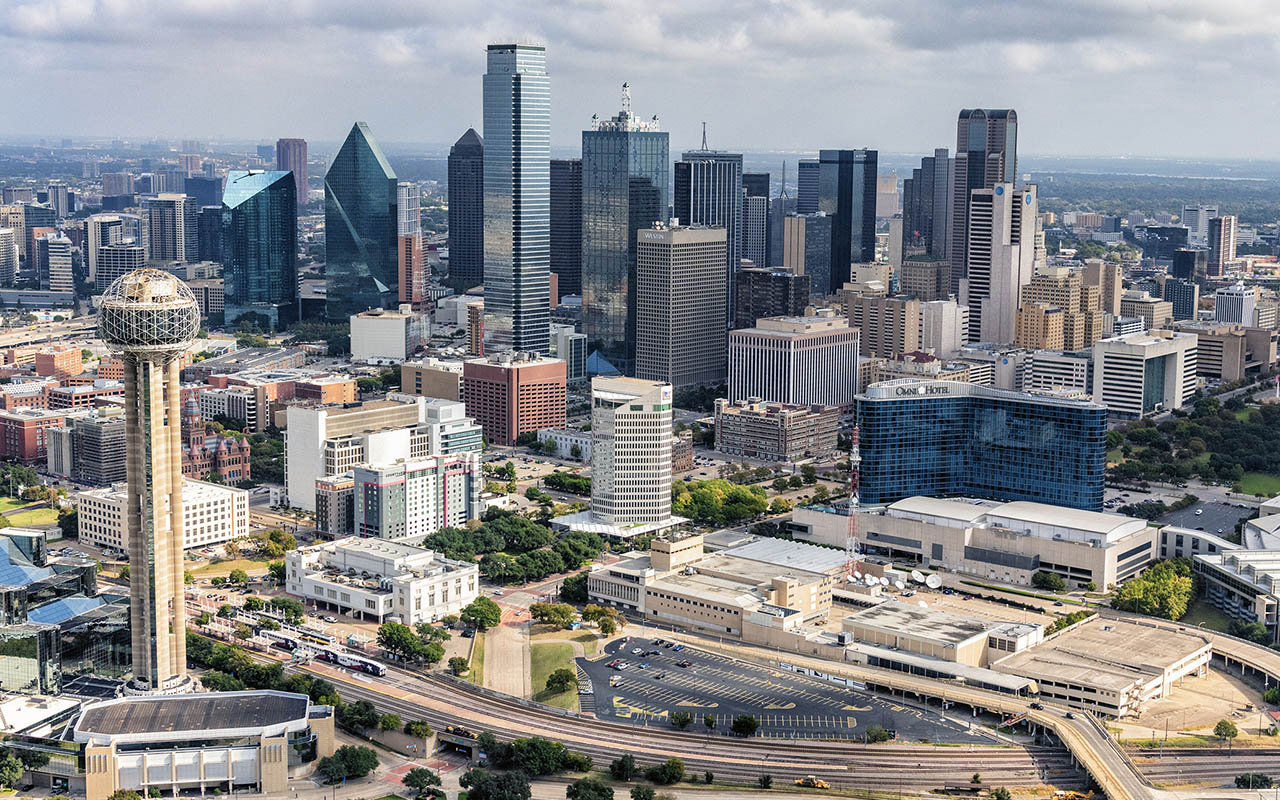
**Downtown Dallas** serves as the city's central business district, featuring dense concentrations of office towers, corporate headquarters, hotels, and retail establishments. Sub-districts include the West End Historic District, Arts District, Main Street District, Farmers Market District, City Center Business District, Convention Center District, and Reunion District. Each area presents unique cleaning challenges, from historic preservation requirements in the West End to high-traffic maintenance needs in the Convention Center District.
**Uptown and Oak Lawn** represent Dallas's premier mixed-use neighborhoods, characterized by dense retail, restaurants, and nightlife venues. These areas require specialized cleaning approaches for hospitality-focused businesses, entertainment venues, and high-end residential complexes with commercial components.
**Deep Ellum**, located immediately east of Downtown, functions as Dallas's primary arts and entertainment district. This historic neighborhood houses numerous music venues, galleries, restaurants, and creative office spaces that demand flexible cleaning schedules and specialized approaches for artistic environments.
**The Dallas Design District**, situated northwest of Downtown, concentrates home design showrooms, art galleries, and creative businesses. This area's high-end retail and gallery spaces require meticulous attention to detail and specialized floor care for polished concrete and designer finishes.
**Victory Park**, surrounding the American Airlines Center, hosts sports venues, luxury hotels, upscale retail, and residential towers. This entertainment-focused district requires event-driven cleaning services and rapid turnaround capabilities.
**The Medical District**, anchored by UT Southwestern Medical Center and Parkland Memorial Hospital, encompasses healthcare facilities, research centers, and medical office buildings that require strict adherence to infection control protocols and healthcare cleaning standards.
**East Dallas** includes established neighborhoods like Lakewood, Lakewood Heights, Wilshire Heights, and the historic Swiss Avenue district. This area features mixed commercial corridors serving residential communities, requiring consistent, reliable cleaning services for neighborhood retail and professional offices.
**Oak Cliff**, annexed in 1903 and located southwest of Downtown, contains the trendy Bishop Arts District and historic Kessler Park neighborhood. This diverse area includes commercial strips serving residential communities and emerging creative business spaces.
Climate Considerations for Commercial Cleaning
Dallas experiences a humid subtropical climate characteristic of the Southern Plains, featuring hot, humid summers and generally mild winters. Located at the lower edge of Tornado Alley, the area is prone to extreme weather events, including severe thunderstorms, tornadoes, and hailstorms—all of which create unique cleaning challenges for commercial properties.
Summer temperatures frequently exceed 100°F, with July typically being the warmest month. These extreme heat conditions place additional strain on HVAC systems and increase the accumulation of dust and particulates in commercial spaces, requiring more frequent filter changes and deep cleaning protocols.
Winter months are generally mild, with January temperatures averaging 56.8°F for daytime highs and 37.3°F for nighttime lows. However, occasional cold fronts known as "Blue Northers" can drop temperatures below freezing for extended periods. Snowfall occurs in approximately 70% of winter seasons, though accumulations are typically minimal at 1.5 inches annually. These freeze-thaw cycles can create moisture intrusion issues in commercial buildings, necessitating specialized water damage restoration and mold prevention cleaning services.
The region receives approximately 37 inches of annual rainfall, with May typically being the wettest month. Spring storm season brings high winds and hail that can damage building exteriors, requiring post-storm cleanup services and exterior building washing.
The U.S. Department of Agriculture classifies Dallas in Plant Hardiness Zone 8b, supporting vegetation that contributes to seasonal allergen loads. Pollen from oak, cedar, and ragweed creates peak allergen conditions during spring and fall, making indoor air quality maintenance and HVAC cleaning particularly important for commercial properties.
Transportation Infrastructure and Logistics
Dallas's position as a transportation hub directly impacts commercial cleaning operations throughout the metroplex. Four major interstate highways converge in the city—I-20, I-30, I-35E, and I-45—with a fifth interstate loop (I-635) encircling the city. This highway infrastructure enables efficient deployment of cleaning crews across the sprawling metropolitan area.
Dallas Fort Worth International Airport, one of the busiest airports globally, generates significant demand for commercial cleaning services in the hospitality, logistics, and service sectors supporting air travel operations. Dallas Love Field provides additional commercial activity requiring cleaning services.
Dallas Area Rapid Transit (DART) operates extensive rail and bus services throughout the city and surrounding suburbs, creating transit-oriented development corridors with concentrated commercial properties requiring regular cleaning services. The DART Red, Blue, Green, and Orange lines connect Dallas to suburbs including Plano, Richardson, and Garland, facilitating commuter traffic to business districts.
Major Commercial and Industrial Zones
Beyond the central business districts, Dallas encompasses numerous specialized commercial areas:
**The Stemmons Corridor** along I-35E represents one of the nation's largest concentrations of hotels, wholesale trade businesses, and industrial properties. This area requires large-scale commercial cleaning services for hospitality venues, warehouse facilities, and distribution centers.
**The Southwestern Medical District** concentrates healthcare facilities, medical research centers, and biotechnology companies requiring specialized cleaning protocols compliant with healthcare regulations.
**The Great Trinity Forest** area encompasses industrial and logistics facilities alongside environmental preserves, creating unique cleaning requirements for businesses operating near sensitive ecological areas.
**South Dallas** includes the Dallas Executive Airport area and numerous industrial parks requiring specialized industrial cleaning services, including warehouse floor maintenance and manufacturing facility sanitation.
Educational Institutions and Campus Cleaning
The Dallas metropolitan area hosts over 41 colleges and universities—the most of any metropolitan area in Texas. Southern Methodist University (SMU), University of Texas at Dallas, Dallas College, and numerous other institutions maintain extensive campus facilities requiring comprehensive cleaning services. These educational environments demand specialized approaches for classroom buildings, dormitories, dining facilities, athletic venues, and research laboratories.
Retail and Hospitality Centers
Dallas features numerous major shopping centers and mixed-use developments requiring professional cleaning services:
**NorthPark Center**, one of the premier shopping destinations in the Southwest, demands high-end retail cleaning standards for luxury boutiques and common areas.
**Galleria Dallas** features an upscale retail environment with distinctive architectural elements requiring specialized maintenance.
**West Village** and **Mockingbird Station** represent mixed-use urban developments combining retail, dining, and residential components with complex cleaning requirements.
**The Dallas Farmers Market** and **Klyde Warren Park** area feature public market spaces and urban parks with unique cleaning challenges for high-traffic public areas.
Commercial Cleaning Considerations for Dallas Businesses
Given Dallas's size, diversity, and climate, businesses require commercial cleaning partners capable of addressing:
**Scale and Scope**: With nearly 386 square miles of city limits and a sprawling metroplex, cleaning operations must efficiently cover large geographic areas while maintaining consistent quality standards.
**Climate Adaptation**: Hot summers, occasional severe weather, and seasonal allergen cycles require flexible cleaning protocols that address temperature-related challenges and post-storm restoration needs.
**Diverse Property Types**: From historic buildings in the West End to modern skyscrapers in Uptown, cleaning services must adapt to varied architectural styles and building ages.
**Industry-Specific Requirements**: Healthcare facilities, financial institutions, technology companies, and hospitality venues each require specialized cleaning approaches and compliance protocols.
**Transportation Access**: Efficient service delivery across a large metropolitan area requires strategic routing and familiarity with Dallas's highway and transit infrastructure.
**High-Profile Events**: As a major convention destination and sports entertainment hub, Dallas businesses frequently require event-driven cleaning services with rapid response capabilities.
Our commercial cleaning services are designed to meet these diverse needs throughout Dallas, providing businesses with reliable, professional cleaning solutions tailored to their specific requirements and operational schedules. Whether maintaining a corporate headquarters in Uptown, a medical facility in the Medical District, or a retail establishment in Deep Ellum, we deliver the consistent quality that Dallas businesses demand.
Neighborhoods We Serve in Dallas
Cleaning Services Available in Dallas
Why Dallas Businesses Choose Us
Area-Focused Service
We understand the specific needs of businesses in this area
Trained Teams
Cleaning staff trained for commercial environments
Flexible Scheduling
After-hours and weekend services available
Quality Checks
Clear checklists and walkthrough-ready results
Nearby Service Areas

Arlington, TX
Full-service commercial cleaning for Arlington businesses and commercial properties.

Garland, TX
Industrial and commercial cleaning services for Garland businesses and facilities.
Irving, TX
Premium cleaning services for Irving corporate campuses and commercial properties.
Mesquite, TX
Commercial cleaning services for Mesquite retail, medical, and industrial properties.
Get Your Free Quote Today
Contact us now for a customized cleaning plan tailored to your Dallas business needs.
Request Free Quotelocations planning guide
How to plan dallas tx for a commercial facility in Dallas
Dallas Commercial Cleaning Services uses the following planning framework to help property managers and business owners turn a request for commercial cleaning and office maintenance into a scope that can be walked, priced, scheduled, and checked. It is designed for practical comparison and does not replace site-specific safety, material, vendor, or regulatory requirements.
Define the Work Before Pricing It
Square footage alone does not define the effort required for dallas tx. Occupancy, floor materials, restroom count, food or production activity, security procedures, furniture density, and the time available between closing and reopening all affect labor and equipment planning. Before pricing dallas tx, document exclusions as carefully as inclusions. Exterior work, high access, consumable supplies, waste handling, specialty floor restoration, equipment interiors, and event cleanup can be scheduled correctly only when responsibility is explicit. Dallas Tx should begin with a written definition of the rooms, surfaces, fixtures, equipment boundaries, and access conditions included in the work. A useful scope separates routine tasks from periodic restoration so the facility manager can see what happens on every visit and what occurs only on a planned cycle. For multi-tenant or mixed-use properties, dallas tx should be divided by responsibility zone. Common areas, tenant suites, back-of-house spaces, loading areas, public restrooms, and restricted rooms can then receive schedules and approval rules that match their actual use.
Build the Schedule Around Operations
A nightly, daily, weekly, or project schedule changes more than visit frequency. It changes how much soil accumulates between visits, which tools are appropriate, how long each visit takes, and whether periodic deep work must be layered into the agreement. Scheduling should be built around operating hours and risk, not around the cleaning company’s convenience. Some commercial facility environments need a complete after-hours reset, while others benefit from daytime attention to entrances, restrooms, spills, or high-traffic common areas. A dependable plan includes a method for reporting schedule changes. The facility contact should know whom to notify, how much lead time is needed, and how missed or added visits affect the monthly program before an urgent request arises. Daytime and after-hours service solve different operational problems. Day porter coverage manages visible conditions while people are present; after-hours crews complete disruptive or time-intensive tasks when work areas can be accessed safely and thoroughly.
Make Quality Control Observable
A single complaint channel prevents service issues from disappearing between building occupants, property management, and the cleaning crew. Requests should be logged with the location, task, urgency, and desired completion time so the response can be verified. Quality control works best when it is tied to the site-specific scope. A supervisor can inspect completion against named rooms and outcomes, record exceptions, assign corrections, and identify patterns that require a change in staffing, tools, or frequency. Inspection frequency should reflect the complexity of the account. A small weekly office may need periodic supervisory review, while a high-traffic or regulated environment may require documented checks several times each week. A quality program should explain how corrections are handled. The facility contact needs a clear response path, a reasonable correction window, and confirmation when the issue is closed rather than a vague assurance that someone will look into it.
Match Methods to Materials and Risk
Consumable supplies deserve their own responsibility list. Soap, paper products, liners, dispensers, batteries, air fresheners, and specialty items may be client supplied, contractor supplied, or billed separately, but the agreement should not leave that question open. A material-safety discussion should include storage and labeling. Facility contacts should know where products and equipment will be kept, which rooms remain accessible to occupants, and how spills or damaged containers are reported. Dwell time and physical removal are central to effective cleaning. A product cannot perform as intended if it is wiped away immediately, and loosened soil still needs to be removed with clean tools rather than redistributed across the surface. Color-coded cloths, pads, and tools can reduce cross-use between restrooms, food areas, workspaces, and public surfaces. The exact system matters less than having a documented method the crew can follow consistently.
Use the Walkthrough to Build the Scope
A useful walkthrough ends with next steps: who will receive the written scope, who can approve revisions, whether a second technical visit is required, and what information is still needed before pricing is final. Access and safety constraints should be demonstrated, not merely mentioned. Alarm panels, loading doors, restricted areas, waste points, water access, electrical access, and equipment storage can change the labor plan materially. If the requested dallas tx includes restorative work, identify the difference between a first-service reset and ongoing maintenance. Startup work may require additional labor that should not be hidden inside the recurring visit price. Ask department leads or regular occupants where cleaning failures are most visible. Facility managers often know the formal complaints, while daily users can identify recurring issues such as neglected corners, supply shortages, or timing conflicts.
Put the Service Agreement in Writing
The agreement should state how holidays, weather closures, and client-requested skips are handled. These events affect visit counts and staffing, and the billing treatment should be clear before the first calendar exception. Insurance and vendor-document requirements should be confirmed during proposal review rather than after award. If the property requires a certificate, additional insured wording, vendor portal registration, or special access documentation, those steps can affect the startup date. Cancellation, renewal, and notice terms deserve the same attention as the cleaning checklist. A facility manager comparing proposals should understand the initial term, renewal method, price-review process, and the notice required to change or end service. Pricing should state whether it is monthly, per visit, hourly, or project based and should identify the assumptions behind it. Changes in occupied square footage, frequency, access time, or task scope need an agreed method for repricing.
Plan for Dallas Facility Conditions
Commercial properties in the region frequently combine offices, warehouses, showrooms, food service, or public-facing areas under one address. Zoning the scope by use keeps the cleaning method appropriate for each part of the building. DFW traffic makes realistic arrival windows important, especially when a crew must meet security or elevator access at a fixed time. The plan should protect enough on-site time to complete the work rather than compressing the scope after a delayed handoff. A local service plan should account for the property’s immediate environment. Construction nearby, open parking, landscaping, loading activity, and pedestrian traffic can change how quickly dust and debris return after a visit. Fast regional growth creates frequent move-ins, renovations, tenant turnovers, and occupancy changes. The cleaning scope should be reviewed when a property changes use instead of assuming the previous tenant’s schedule remains appropriate.
Compare Providers on More Than Price
References are most useful when the compared account resembles the property in size, use, and schedule. A successful small office account does not by itself demonstrate the systems needed for a large, high-traffic, or specialized facility. Review the proposal for vague language. Terms such as “as needed,” “regularly,” and “periodically” should be converted into frequencies, triggers, or approval rules before the agreement is signed. Consider the cost of under-scoping. Persistent complaints, damaged finishes, emergency restoration, staff time spent supervising the vendor, and repeated provider changes can cost more than a properly designed recurring program. A pilot or structured startup can be useful when the facility is complex or the current condition is uncertain. Define what will be evaluated, how long the evaluation lasts, and what information determines the permanent scope.
Start, Measure, and Adjust the Program
The crew should record conditions outside the approved scope rather than quietly ignoring them or performing unapproved work. Photos and concise notes allow the facility manager to decide whether a separate service is warranted. After the first service cycle, compare actual labor and facility condition with the proposal assumptions. If the original scope was inaccurate, adjust it openly rather than expecting quality to survive an unrealistic workload. Closeout reporting should match the account’s complexity. A small property may need simple completion confirmation; a larger or specialized account may need inspection notes, issue photographs, supply alerts, and a record of periodic tasks. A stable program still needs review after renovations, staffing growth, seasonal traffic, operating-hour changes, or new equipment. Each change can alter soil load, access, or the time available for dallas tx.
Bring to the walkthrough
- Approximate square footage, floor plan, and operating hours
- Current frequency, known complaints, and priority areas
- Flooring and surface notes, restricted rooms, and access rules
- Desired start date, budget constraints, and approval contacts
Expect in a written proposal
- Task scope by zone and visit frequency
- Service windows, periodic work, and supply responsibility
- Quality checks, communication, and correction procedures
- Pricing assumptions, exclusions, and change-order rules